Cross-border e-commerce and global payment platforms: a new battlefield for financial infrastructure
As the digital economy continues to expand, global trade patterns are undergoing profound changes.
Traditional financial infrastructure - including cross-border settlement, currency exchange, credit assessment and payment systems - is being reshaped by a new generation of cross-border e-commerce and payment platforms represented by Amazon, Alibaba, Shopify, Stripe, PayPal, Adyen, etc.
In this emerging landscape, finance is no longer just a function exclusive to banks, but has gradually become one of the core strategic layouts of platform-based enterprises. From collection and payment, virtual accounts, foreign exchange routing, to real-time credit and financial data integration, these platforms are building their own global financial ecosystems and quietly changing capital flows, monetary efficiency and the fate of small and medium-sized enterprises.
In the face of this round of platform financialization, traditional financial institutions see both opportunities for cooperation and the risk of being marginalized. Who will hold the right to speak in the next era of payment is no longer just a technical issue, but a strategic game in the global financial landscape.
The rapid development of cross-border e-commerce has increasingly complex requirements for global financial infrastructure. In the past, the financial system was mainly designed for domestic transaction services, relying on regional clearing, exchange rate matching and manual reconciliation.
However, today's cross-border e-commerce transactions are highly decentralized, real-time, multi-currency, and small-amount high-frequency. This places higher demands on the response speed, cost control, and regulatory compliance of the payment system.
Global e-commerce platforms are no longer satisfied with outsourcing traditional bank payment services, but are gradually extending upstream to reduce transaction friction and improve user experience by building or deeply integrating payment systems.
For example, Amazon has deployed its own payment gateways in multiple markets and piloted short-term credit products; Alibaba's Alipay has expanded RMB cross-border payments to multiple emerging markets, with the goal of building a complete consumer and B2B payment network.
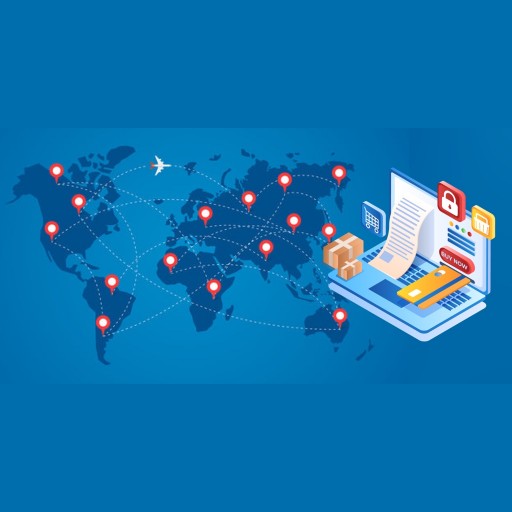
Shopify has cooperated with platforms such as Shopify Payments and Stripe to achieve rapid account opening and multi-currency settlement for global merchants.
At the same time, global payment platforms such as PayPal, Adyen, Stripe, etc. are gradually moving away from the role of "technical tools" and turning to "digital banking infrastructure" providers.
In the ecosystem they serve, payment is only the entrance, and more important is the subsequent transaction data management, risk assessment, credit support, and foreign exchange optimization.
Take Stripe as an example. The platform has provided a full stack of services including enterprise wallets, fund splitting, and global tax calculation, and has applied for financial services licenses in multiple jurisdictions. This trend shows that multinational platforms are transforming themselves into "financial systems on platforms", fundamentally redefining the way money flows.
This development trend has particularly significantly changed the financing path of small and medium-sized enterprises. In the traditional system, small cross-border merchants often find it difficult to obtain fast credit and flexible settlement.
However, with the real-time transaction data accumulated by payment platforms, new platforms can build dynamic credit models and provide merchants with automated financing services with almost no collateral. This data-driven "embedded finance" model is gradually becoming the main source of liquidity for small and medium-sized enterprises around the world.
However, this transformation is not without challenges. Regulatory issues are increasingly becoming the focus, especially in terms of cross-border data processing, anti-money laundering (AML), customer identification (KYC), and tax declaration.
Central banks and financial regulators in various countries have gradually realized that the financial capabilities of platform-based companies have gone beyond the traditional "technology supplier" category, and are therefore redefining the boundaries of fintech companies.
Taking the European Union as an example, the Payment Services Directive 2 (PSD2) and the Digital Operational Resilience Act (DORA) have begun to regulate platform-based finance in a more detailed manner.
In the United States, the Financial Stability Oversight Council (FSOC) and the Office of the Comptroller of the Currency (OCC) are also considering how to implement more direct reviews of systemically important payment platforms.
In addition, the conflict between sovereign currencies and local payment ecosystems is also intensifying. In some emerging markets, governments are cautious or even resistant to platform-led payment systems, fearing that they will impact their own monetary policy and regulatory capabilities.
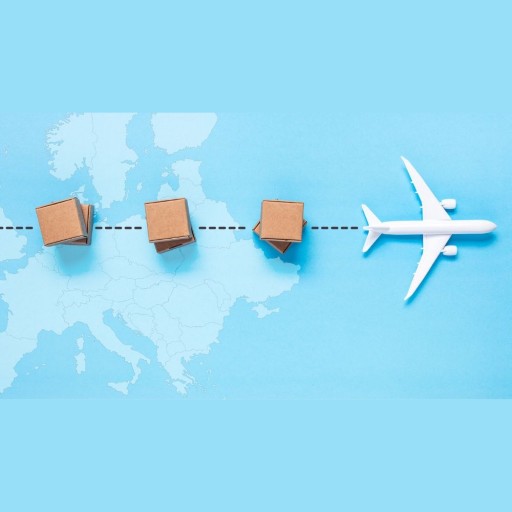
For example, India restricts global e-commerce platforms from dominating the local payment market, and Brazil strengthens the dominance of the local clearing system PIX. These policy changes force platforms to find a delicate balance between efficiency and compliance.
Another variable worth paying attention to is the development of digital currency and central bank digital currency (CBDC). In the foreseeable future, cross-border e-commerce and payment platforms may become important interfaces for the implementation of CBDC.
The user network and technical capabilities accumulated by the platform make it a natural "digital currency distributor". Once it is integrated with sovereign digital currency, it will further strengthen its financial intermediary status.
For traditional banks, the rise of platform finance is both a threat and an opportunity. On the one hand, it compresses the profit space of banks in payment, clearing, credit and other links; on the other hand, banks can also expand the B2B service market by cooperating with platforms to export compliance infrastructure, risk control models and account systems.
Many banks are accelerating the opening of API interfaces to provide banking as a service (BaaS) support to payment platforms, so as to retain a place in the new financial landscape. At the same time, some international banks such as Citi and HSBC are also building their own cross-border financial technology solutions to try to confront emerging platforms head-on.
The future financial infrastructure will no longer be a centralized system dominated by banks and clearing institutions, but a hybrid ecosystem jointly built by platforms, technology companies, banks and regulators. In this new battlefield, whoever can effectively balance compliance, efficiency and user experience will have the core voice in global payment and wealth flow.
For investors, observing this trend not only helps to understand the valuation logic in the fields of payment and financial technology, but also concerns the future direction of the entire cross-border e-commerce and the global economic landscape.
Financial infrastructure is changing, and this change is no longer just a back-end engineering problem, it is becoming the front line of market competition.
 1
1 1
1OTHER NEWS
-
- Do small businesses really need tax services? When can they file their own taxes?
- By YCY 27 Jan,2026

-
- Credit card points and rewards seem cost-effective, but they actually hide these traps
- By ZXY 01 Sep,2025

-
- Some Tips on Buying a Condo!
- By Wendy 24 Apr,2023

-
- Trump reignites tariff war, global supply chains face another shakeup
- By ZXY 28 Jul,2025

-
- How much longer can the seven tech giants of the US stock market withstand high interest rates?
- By ZXY 28 Jul,2025
-
- Global manufacturing is slowing down in tandem. When will deflation strike?
- By ZXY 01 Aug,2025

-
- How much longer can the eurozone hold out? The ECB has reached the end of its rate hike cycle
- By ZXY 01 Aug,2025
-
- How to Effectively Manage Debt: Strategies for Balancing Payments and Savings
- By YCY 07 Jan,2026

-
- Who is the Primary Lender When Applying for a Home Loan? These Points are Important!
- By Little Grapes 24 Apr,2023

-
- How do I Choose Between Selling my Home and Renting it out?
- By Wendy 24 Apr,2023

-
- Why Do Most People Overlook “Cash Flow Risk”?
- By ZXY 11 Oct,2025

-
- Watch out for the Following Credit Card Scams!
- By Wendy 24 Apr,2023