After Bitcoin Halves, Who Will Lead the Next Round?
In April 2024, Bitcoin completed its fourth “block reward halving”. As designed in the Bitcoin whitepaper, mining rewards are halved every four years or so, reducing new supply and driving scarcity. This event has had a significant impact on Bitcoin's historical bull market cycles.
So the question arises: will the next cycle really happen on schedule after 2025? And who will lead it? Will it be traditional institutional money, retail FOMO, or will it be fueled by the fire of emerging crypto projects, DeFi, and AI concepts? Can this bull market “replicate the past”?
This article will help you read the background of Bitcoin halving in layman's terms, the evolutionary logic of previous markets, and try to answer the question: who will be the next dominant force in the market?
What is halving? Why is it so important?
One of the core aspects of Bitcoin is that the total amount is constant: 21 million pieces. To control inflation, it employs a mechanism that halves the number of newly issued bitcoins every 210,000 blocks (about four years).
Since its inception in 2009, Bitcoin has experienced four block reward halving. The first time was in November 2012, when the reward for miners was reduced from 50 to 25 bitcoins per block. In the 12 months following the halving, Bitcoin's price rose more than tenfold, kicking off the first widely publicized bull market.
The second halving occurred in July 2016, when the reward was reduced from 25 to 12.5 At the end of 2017, more than a year after this, the price of Bitcoin approached $20,000 for the first time and many retail investors began to enter the market on a large scale.
The third halving came in May 2020, when the reward was further halved to 6.25 Bitcoins. Since then, Bitcoin reached an all-time high of over $60,000 in 2021 before experiencing a sharp pullback.
The most recent halving just occurred in April 2024, with the reward having dropped to 3.125 Bitcoins per block. Today's price action is uncertain, but the market remains highly concerned about whether there will be a repeat of the bullish cycle that followed the halving.
Why is it easy to have a bull market after every halving?
Supply and Demand Logic: New bitcoin offerings have decreased, while market demand (especially from long-term investors and institutions) has not fallen in tandem, creating a gap between supply and demand that pushes up the price.
Narrative Logic: The halving injects a “scarcity story” into Bitcoin, which increases market attention and triggers the entry of capital.
Cyclical Consensus: Many market participants are “expecting a rise” and are willing to make early preparations, which in turn amplifies the momentum of the market.
However, please note: the halving is not a magic button that works immediately. Historically, there is usually a “lag” of a few months to a year.
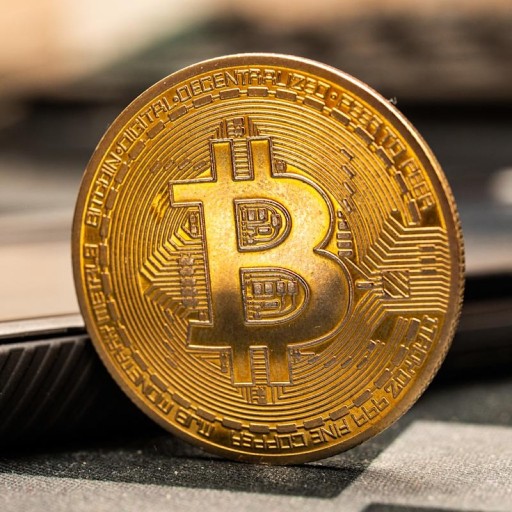
How will the market perform after the halving in 2024?
As of mid-2025, Bitcoin has not risen immediately after the halving, but has entered a sideways range, fluctuating between $50,000 and $70,000 dollars. This doesn't match the “immediate surge” that many people expected, so why is this?
Reason 1: the market has been “priced in advance”.
Since the end of 2023, many institutional and individual investors have been “betting in advance on the halving”, and the price has risen from $20,000 to nearly $70,000 before the halving.
Reason 2: Macro factors are still uncertain
Although the Federal Reserve began to cut interest rates is expected to heat up, but the overall economic growth is slow, geopolitical conflicts, resulting in funds for high-risk assets are still cautious.
Reason 3: changes in market structure, the dominant force is not clear
This time the market, retail investors are no longer the protagonists, institutions have become more important, ETF products listed, sovereign funds concerned, traditional financial platforms to participate in the price of bitcoin behavior more “rational”.
So the question remains - if the retail boom subsides, who will be the dominant force in the market?
Who will lead the next round? Four forces are at play
1. Institutional capital: rationally dominated, continue to increase the code
Since 2024, several spot bitcoin ETFs have been formally approved in the U.S. Giants such as BlackRock and Fidelity have launched crypto products.
Institutional investors tend to favor:
Long-term holdings;
Prefer compliant and secure channels;
Use Bitcoin as the “digital gold” component of their asset portfolios.
Dominant Potential: High. If the U.S. dollar weakens and interest rates fall, institutions may continue to allocate to Bitcoin as a safe-haven and diversification tool.
However, note that institutions are more concerned with risk management and will not chase the market and promote excessive speculation. 2.
2. Retail Capital: Recovering, but weakening
The biggest driver of the Bitcoin bull market in 2020-2021 is the tens of millions of new retail users around the world. They got involved through exchanges, social media, NFT platforms, DeFi apps, and more.
Today retail investors invest:
More cautious, loss memories remain;
Subject to global economic pressures (inflation, employment, interest rates);
More focused on “practical applications” than on “get-rich-quick myths”.
Dominant Potential: Medium. If the market starts, retail investors can still contribute, but they are no longer the “engine”.
3. AI + blockchain: new narrative brings new money
In 2024-2025, the integration of AI and blockchain begins to heat up, for example:
Decentralized AI platforms (e.g. Fetch.ai, SingularityNET);
AI-powered crypto-trading systems;
Using blockchain to record AI training data and prevent model abuse.
The popularity of the AI concept could trigger a new round of “on-chain innovation fever,” driving up assets around the Bitcoin ecosystem.
Dominant Potential: Medium-high. Narrative power to explode, but it is still early in the process and needs to be validated for practicality.
4. Sovereign Countries and Central Bank Digital Currency (CBDC) Gaming
Multiple countries (especially developing countries) are pushing forward with CBDC issuance, and some regimes are open to bitcoin and even listed as fiat currency reserves (e.g. El Salvador).
There may be countries in the future:
Include Bitcoin in foreign exchange reserves;
Promote the development of exchanges and infrastructure compliance in their countries;
Encourage people to “hedge against fiat currency devaluation” in the face of inflation.
Dominant potential: low to medium. State behavior is robust, not trading frequently, but potentially stabilizing market structure.
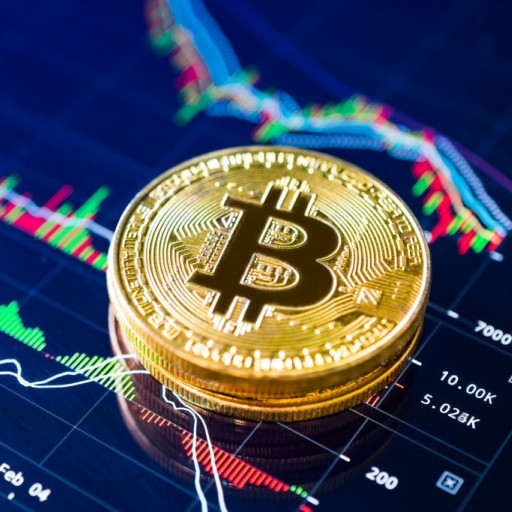
Are there assets other than Bitcoin worth looking at?
If you are an investor who is not only interested in Bitcoin itself, but also in the whole crypto-asset market, which may be entering a “re-rating” phase due to the halving, the following asset classes may be worth watching:
1. Ethereum
As the “king of smart contract platforms”, its ecological activity will determine whether DeFi, NFT, and AI applications can continue to thrive;
Energy efficiency has been greatly improved after PoS is enabled, which is more acceptable to organizations;
ETH ETF is expected to follow suit, bringing in new capital inflows.
2. Altcoins
Layer 2 (e.g. Arbitrum, Optimism): strong capacity expansion;
AI Narrative coins: linked to AI applications, high speculative heat;
Meme coins (e.g. DOGE, PEPE): sentiment indicators, extreme performance in the bull market.
Recommendation: speculative assets need to control positions, should not be heavy.
3. Infrastructure tokens
Decentralized storage (e.g. Filecoin, Arweave);
Decentralized computing, bandwidth, AI reasoning (e.g. Render);
Blockchain data service providers (e.g. The Graph).
These projects could become “Web3.0 cloud service platforms” with long-term growth potential.
How should individual investors lay out their plans?
If you want to participate in this round of the market, but are worried about too much volatility or not being able to step on the right rhythm, here are a few suggestions:
1. Do a good job of risk perception, do not bet on the halving that is the bull market
Halving is not a surefire signal. Short-term price may shock or even retracement, need to be prepared.
2. buy in batches + long-term holding is the main tone
Choose to invest in high-quality assets (BTC, ETH) instead of chasing up and down, and control the distribution of positions.
3. Small amount of participation in the new narrative, access to high-risk high-return opportunities
Allocate 5-10% position to AI narratives, DeFi, infrastructure new projects, but must be aware of potential zeroing risk.
4. be aware of global regulatory and tax policy changes
More and more countries are complying with crypto assets, with exchange selection, tax reporting, and asset security becoming part of investing.
Each past bull market following a halving has had its own characteristics -
2013: geek mania;
2017: the ICO explosion;
2021: the DeFi + NFT double-drive.
The market after 2025 may be a more “mature” performance. Bitcoin is gradually converging from a speculative asset to digital gold, and the dominance of the market has been handed over from retail investors to institutions, with speculative sentiment giving way to long-term allocation.
Will Bitcoin reach new highs? We can't predict that. But we can be sure: it is in the global financial system more and more “can not be ignored” position.
The future of Bitcoin is no longer just a change in the number of addresses on the chain, but also the result of global macro-fund flows, policy games, technological narratives and shifting beliefs.
 1
1 1
1OTHER NEWS
-
- Watch out for the Following Credit Card Scams!
- By Wendy 24 Apr,2023

-
- Global manufacturing is slowing down in tandem. When will deflation strike?
- By ZXY 01 Aug,2025
-
- Credit card points and rewards seem cost-effective, but they actually hide these traps
- By ZXY 01 Sep,2025

-
- Gold surges to a new all-time high—what are investors afraid of?
- By ZXY 29 Jul,2025

-
- How much longer can the seven tech giants of the US stock market withstand high interest rates?
- By ZXY 28 Jul,2025
-
- With China's exports declining, is the global consumption chain beginning to break?
- By ZXY 31 Jul,2025

-
- Fixed deposits are not as good as flexible financial management? Analysis of financial management trends in 2025
- By ZH 24 Jul,2025
-
- What do you Mean by Mortgage? What Does it Mean to Have a Mortgage?
- By Little Grapes 24 Apr,2023

-
- How much longer can the eurozone hold out? The ECB has reached the end of its rate hike cycle
- By ZXY 01 Aug,2025
-
- How to Avoid Being Scammed by Credit Card Fraud!
- By Wendy 24 Apr,2023

-
- The widening U.S. fiscal deficit is fueling debt concerns
- By ZXY 30 Jul,2025

-
- Real Estate Investment Needs to be Careful!
- By Little Grapes 24 Apr,2023